

You might have heard about “freezing off” a mole or skin tag. A friend may have talked about it, or you found it while searching for skin treatments online. But what does this really mean? Is it safe? Will it hurt? What happens to your skin when it’s treated with liquid nitrogen? Check out our skin tag Removal here!
Grab a warm drink—we’re about to step into the chilly world of cryotherapy. This isn’t about standing in a cold chamber; it’s a science-led way of using cold temperatures to remove unwanted skin growths simply and precisely.

What is Liquid Nitrogen Treatment Leeds?
Liquid nitrogen treatment, also known as cryotherapy, is a fast and gentle way to get rid of unwanted skin growths. This includes moles, skin tags, and warts.
By using a very cold liquid, about -196°C, on the area that has a problem, it freezes and harms the specific tissue. This happens without needing to cut or use stitches.
It’s a favorite option for many people because it’s quick, works well, and often has little to no recovery time. It’s often used to take away:
- Skin tags
- Warts
- Moles (only if they are not harmful)
- Actinic keratoses (skin spots that could become harmful)
- Seborrheic keratoses (non-harmful growths)
What Exactly Is Being Done to My Skin?
Here’s a breakdown of what exactly happens when liquid nitrogen is applied to your skin:
- Freezing the Area: The liquid nitrogen Leeds is applied to the skin, rapidly cooling the area to -196°C.
- Cell Damage: The extreme cold causes the skin cells in the targeted area to freeze, breaking them apart and causing them to die off.
- Tissue Destruction: The frozen tissue can no longer survive, so it begins to break down.
- Scabbing and Shedding: Over the next few days or weeks, the damaged tissue forms a scab and eventually falls off naturally.
- New Skin Growth: Once the dead tissue sheds, your body replaces it with fresh, healthy skin underneath.
In short, it’s a controlled process of freezing and removing the unwanted growth to allow your skin to heal and regenerate. Large Two-Headed Cherry Angioma Leeds– can I use Cryotherapy?
Why Freeze Instead of Cut?
So why choose Liquid Nitrogen over surgical removal or laser treatment?
- Non-invasive: There’s no cutting involved and no stitches needed afterwards.
- Quick procedure: It’s usually completed in under 5 minutes, making it very efficient.
- Minimal downtime: Most people can get back to their normal routine straight away.
- Low risk of infection: The treated skin naturally blisters and then sheds away, removing the damaged tissue.
- Cost-effective: In most cases, it works out cheaper than surgery or laser-based treatments.
It’s especially ideal for people looking for a fast, outpatient option with very little aftercare required.
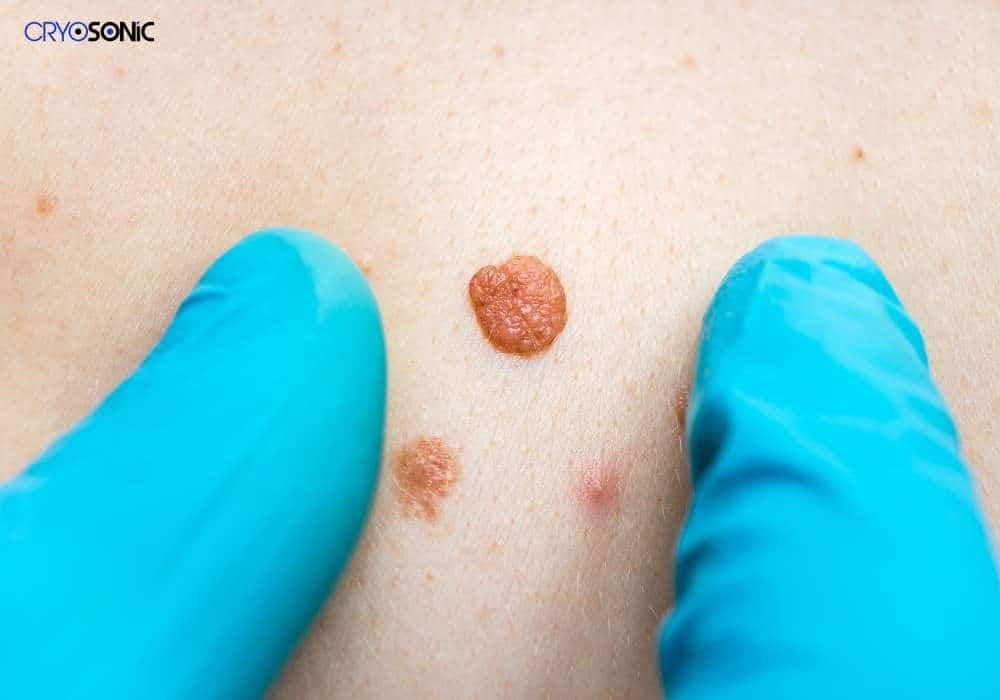
The Procedure: Step-by-Step Breakdown
Here’s what happens when you walk into have a mole or skin tag frozen:
Examination and Diagnosis
Before anything happens, a skilled provider will check the growth. It’s important to make sure that it’s not harmful. If there’s any worry, they might recommend a biopsy first.
Preparation
The area is cleaned. Depending on where it is and how much pain you feel okay with, a numbing cream may be used. But most people don’t need it.
Application of Liquid Nitrogen Leeds
The doctor will use liquid nitrogen with a cotton swab, a small tool, or a spray. This treatment may take 5 to 30 seconds, based on how large and deep the growth is.
The freezing process works by:
- Quickly lowering the skin’s temperature
- Ice crystals causing form inside the cells
- Damaging the cell membranes
- Stopping blood flow to the area
- Resulting in tissue death
Immediate Sensation
Most patients feel a sharp, cold sting. It’s like a strong feeling of an ice cube burn. Some people say it feels like a quick zap. This feeling usually lasts only a few seconds. After the treatment, the area may feel tingly, puffy, or a bit sore. See Our Cryosonic Cryopen Treatment Prices
What Happens After Freezing?
After freezing, you can expect a few things to happen as your skin heals. Initially, the treated area might turn white or red, and you may feel some soreness or swelling, which is completely normal.
In some cases, a small blister may form as the frozen tissue begins to heal. Within a few days, the area will start to scab over, protecting the new skin beneath.
Over the next 1-2 weeks, the scab will naturally fall off, revealing fresh, healthy skin underneath. As your body heals, it replaces the damaged tissue with new skin, and the mole, wart, or skin tag will be gone.
This entire process is fairly straightforward, and by following aftercare instructions, your skin will be back to normal in no time!

Is It Painful?
The freezing process is not usually painful. However, you may feel some discomfort. Most people say it feels like a sting or a burn for a few seconds while the liquid nitrogen works. It feels like cold or mild frostbite.
Once the treatment is over, the discomfort usually goes away fast. Later, there might be some soreness or a slight ache in the treated area, but it’s often easy to handle and does not last long.
So, while it’s not totally free of pain, most people feel it is manageable and worth the fast results!
Is There Any Downtime?
The good news is that there is often a short break after liquid nitrogen treatment in Leeds. You can usually return to your normal activities right away. However, you might see some redness, swelling, or feel a bit of pain in the treated area for a little while. It may also feel a little tender for a few days.
The area will probably form a scab. This scab will fall away by itself in about 1-2 weeks. During this time, it is important not to pick at the scab. This will help to avoid scarring. Most people can go back to their normal routine without much interruption.
Are There Risks or Side Effects?
Yes, there are some risks and side effects to know about, but they are mostly mild:
1. Redness and Swelling: After the treatment, the area may feel a bit red or puffy. This is normal and usually disappears within a few hours to a day.
2. Blistering: A small blister might appear where you applied the treatment. It’s not dangerous, but you should not pop it to avoid an infection.
3. Scarring: Freezing often leaves less scarring than cutting. However, there is still a small chance of scarring, especially if the growth is large or deep.
4. Changes in Skin Color: After it heals, the area that was treated may look a bit lighter or darker than the skin around it. This often fades as time goes on, but it could take several months.
5. Infection: Like with any treatment, there is a small risk of getting an infection. This is more likely if the scab is picked at before it falls away.
But overall, most people find Liquid Nitrogen cryotherapy to be a safe and good way to treat skin growths. There are very few problems that can come up. Just follow the aftercare and you will be okay!
What About Scarring?
In most cases, scarring is minimal or non-existent — especially when the treatment is shallow, and the lesion was small. However, deeper freezing may occasionally lead to a slight indentation or light mark.
Skin tone plays a role: People with darker complexions may notice temporary light or dark spots in the area, which usually fade with time. Check Here Why Our Treatment Is Safe For Children in Leeds

Who are the ideal candidates for Liquid Nitrogen Cryotherapy
Liquid nitrogen cryotherapy in Leeds is a widely used option for removing benign skin growths, but it isn’t suitable for everyone. The people who benefit most from it usually include:
- Benign Skin Growths: Liquid nitrogen cryotherapy works best on non-cancerous conditions such as skin tags, common moles, and warts. It’s important to have the area properly assessed before any treatment is carried out.
- Small, Superficial Lesions: It tends to be most effective on smaller, surface-level growths that can be easily targeted, such as tiny moles and skin tags sitting on the outer layer of skin.
- Desire for a Non-Invasive, Quick Treatment: For anyone wanting to avoid surgery or more involved procedures, liquid nitrogen cryotherapy is a simple option. It’s quick, usually with minimal downtime, and no need for cuts or stitches.
- Skin Tags or Moles That Cause Irritation: If skin tags are becoming uncomfortable by rubbing against clothing, jewellery, or everyday movement, cryotherapy can provide a fast and practical solution.
- Cost-Effective Solution: Liquid nitrogen cryotherapy is generally more affordable than surgical removal or laser-based treatments, making it a popular choice for those looking for a budget-friendly option.
- Limited Skin Growths: If you only have one or a small number of growths to treat, liquid nitrogen cryotherapy works particularly well. It is best suited for targeted, localised treatment.
Aftercare Tips: How to Help Your Skin Heal Properly
After freezing, looking after your skin can really support the healing process. Here are a few simple aftercare tips you can follow:
- Keep It Clean: Gently wash the area with mild soap and water. Don’t scrub it, just gently pat the skin dry with a clean towel.
- Avoid Scratching or Picking: It can be tempting, but try not to pick at any scab or blister. Let it come off on its own to reduce the risk of scarring or infection.
- Moisturise: Use a gentle, fragrance-free moisturiser to keep the area hydrated and support the natural healing process.
- Protect from the Sun: Try to keep the treated area out of direct sunlight. If you need to go outside, make sure to apply a broad-spectrum sunscreen with SPF 30 or higher.
- Don’t Pop Blisters: If a blister appears, leave it alone. Popping it can increase the chance of infection or may lead to scarring.
- Watch for Infection: If you notice increased redness, pain, swelling, or any pus, it’s best to speak with a doctor, as these may be signs of infection.
With a bit of simple care, the area should heal well, leaving your skin looking smooth and refreshed.
Final Thoughts: Is Freezing Off Moles or Tags Worth It?
Liquid Nitrogen Leeds is a fast and safe choice for getting rid of small skin problems. While it might sound a bit scary, the process is simple, the recovery is easy, and you can get great results.
If you have a skin tag that gets caught on clothes or a mole that makes you feel uneasy, this mole removal treatment might be an easy way to have smoother and clearer skin. It offers a solution without cutting, stitches, or any trouble.
Still have questions? Contact your local skin clinic to schedule a consultation. Don’t wait for your decision — learn more and take the next step for your skin health and self-assurance.
FAQs: Liquid Nitrogen Mole & Skin Tag Removal in Leeds
Q: Does freezing off a mole or skin tag with liquid nitrogen actually work?
Yes, liquid nitrogen cryotherapy is a very effective method for removing common skin tags, warts, and benign moles. The extreme cold destroys the targeted skin cells, so the growth naturally falls off over the following days or weeks. Most patients in Leeds clinics find it quick, reliable, and minimally uncomfortable.
Q: Can all types of moles be safely treated with this procedure?
Cryotherapy is only recommended for benign, non-cancerous moles. Before freezing, your practitioner will examine the lesion to confirm it’s harmless. If the mole looks suspicious or unusual in shape or colour, the clinic may suggest a biopsy instead. This ensures safety and prevents misdiagnosis.
Q: What does the treated area look like immediately after freezing?
Right after liquid nitrogen is applied, the area usually turns white almost instantly as it freezes. Within a few minutes, it may then become red, slightly swollen, or a bit tender to the touch. In some cases, a small blister can form over the next few hours, which is a normal part of the skin’s healing response.
Q: Will it hurt when my mole or skin tag is frozen off?
Most people describe it as a quick, sharp cold sensation, similar to holding an ice cube on the skin for too long or a brief “sting” like dry ice. This feeling only lasts for a few seconds of treatment. Afterwards, the area can feel mildly sore, warm, or a little tingly, but this usually settles quite quickly.
Q: How long does healing take after cryotherapy in Leeds?
Healing generally takes around 1–2 weeks. A scab will usually form as the treated area dries out, and it will naturally fall away once the skin underneath has healed. Most people in Leeds clinics can carry on with normal daily activities straight after treatment, as there’s typically very little downtime.
Q: Can the treatment leave a scar?
Scarring is uncommon, especially when the lesion is small and the freezing is shallow. Some individuals—particularly those with deeper lesions—may notice a slight mark or indentation after healing. Temporary pigmentation changes (lighter or darker skin) can also occur, but usually fade over time.
For Further Information, Please Call Us: 03300 100 392